Free · No sign-up · US & Canada · mowing + 8 add-ons

Lawn Mowing & Lawn Care Cost Calculator

Wondering about the cost of mowing grass? Estimate mowing by size, condition, terrain and state rate — then add weed control, dethatching, aeration, fertilization, mulch, seeding, leaf removal or yard cleanup. Compare DIY vs hiring and generate a printable quote.

Estimate Your Lawn Care Cost

2026 planning estimates. Mowing is priced per visit (US base ≈ $0.0115/sq ft from LawnStarter 2026 ranges; Canada ≈ CA$0.011/sq ft from Mow.ca 2026) × grass condition × terrain × obstacles × your state/province cost index, minus your plan discount. State/province indices use the MERIC/C2ER Cost of Living Index (2026); season lengths are anchored to USDA hardiness zones. See the Methodology for every source. Estimates only — not a binding quote.
Estimates for planning only. Figures come from published 2026 market benchmarks and climate data, not a live quote from a local provider. Your real price depends on your exact lawn, access, and local competition. Confirm with a pro before you buy. Read the Methodology & Sources to see exactly how each number is derived and cited.
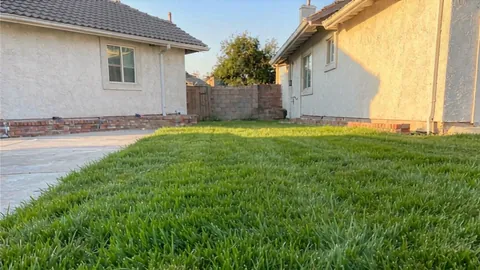
Suburban front lawn mown very short, about one inch, tight even turf like a fairway Short−10%
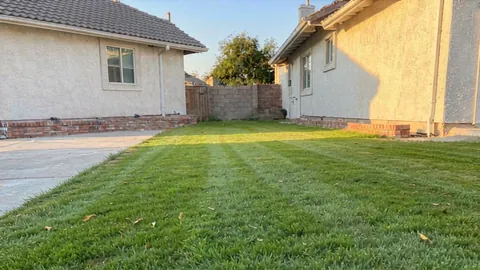
Typical healthy suburban front lawn mown to about three inches Normalbase rate
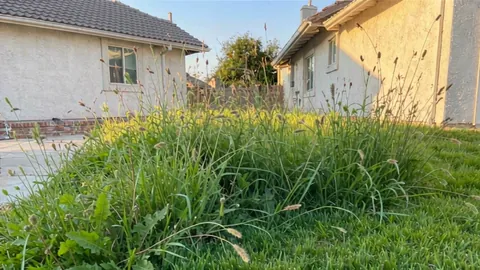
Front lawn that has missed two or three cuts, tall grass about six inches with seed heads Tall+45%
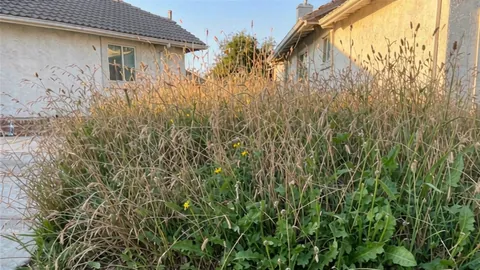
Severely overgrown lawn about ten inches tall with straw coloured stalks, weeds and dandelions Overgrown+90%
Same lawn, same light — only the height of cut differs. Overgrown also means seed heads and weeds you have to knock down before the first clean pass, which is why it costs nearly double.

Service frequency recurring plans lower the per-visit rate

Terrain slope adds labor time

Obstacles trees, beds, tight access

Total length of edges to trim — along the driveway, fence, sidewalk and garden beds. Leave it blank and we estimate it from your lawn size (≈ 4 × √area). Enter a real measurement for a sharper quote.

Additional services optional — added to the season total

Prices update live. Add-ons are priced separately from mowing.
$—
Per mow
$—
Per month (in season)
$—
Per season (all services)
—

DIY or Hire? Run Your Own Numbers

This is not a fixed answer — it's a model you can drive. Your lawn inputs stay in sync with the calculator above, then you add your mower, your speed and your hourly value. Change the mower and watch both the time and the money move.

Homeowner in a light blue t-shirt pushing a walk-behind petrol mower across a suburban front lawn, a freshly mown strip behind him and uncut grass ahead
The DIY side of the equation. A walk-behind mower on a typical suburban lot is roughly 30–45 minutes of actual work once you count trimming and blowing — the calculator below turns that time into a dollar figure at your own hourly value.

1 · Your lawn

Synced with the calculator above — edit either one.

—

2 · Your gear & your time

Deck width and speed come from the mower, but you can override them with real spec numbers.

—
Per mow
—
Your hours / season
—
DIY cost / mow
fuel + upkeep only
—
DIY cost / season
fuel + upkeep, mower owned
Where the time goesMinutesWhy
HorizonMowsDIY cash + your timeHireCheaper

How to read it: "DIY cash" is fuel/energy plus upkeep for that period. Short horizons and Year 2 assume you already own the mower, so they show the true marginal cost — add the mower price if you are starting from zero. Year 1 shows the real cash outlay including the machine; the 5-year row replaces it as it wears out, so Year 1 + 4 × Year 2 ≈ 5 years. "+ your time" values your hours at the rate you set. Hire prices come from the same pricing model as the calculator above, so the two can never disagree.

3 · Does a bigger mower pay for itself?

Same lawn, same operator, different deck. Times assume the speed and efficiency typical for each class.

As an Amazon Associate we earn from qualifying purchases. Mower prices are typical 2026 US retail bands; Amazon links are placeholders you replace with your own tracking ID.

Full DIY vs Hire guide: 1 mow → 5 years →

Typical Prices by Lawn Size & Service

US national averages for 2026, before state multipliers. Mowing is per visit; add-ons are per application or per season.

Mowing (per visit, US index 1.00)

Lawn sizePer visit — weekly plan → one-timeWeekly plan, per monthNotes
Small (~2,000 sq ft)$30–$35$119Minimum charge dominates at this size
Medium (~5,000 sq ft)$49–$58$196Most suburban homes
Large (~10,000 sq ft)$77–$90$307Price per sq ft falls with volume
1 Acre (43,560 sq ft)$200–$235$798Wide-deck walk-behind or rider
2+ Acres$313–$368$1,253+Wide-deck or zero-turn territory

In the "per visit" column the lower figure is the weekly-plan price (15% off) and the higher figure is one-time — both at national index 1.00. This is a plan-vs-one-time range, not a geographic one: the same lawn also moves ±% by state (see below), which is separate again. Your state/province index, grass condition, slope and obstacles all multiply these numbers — that is exactly what the calculator above does.

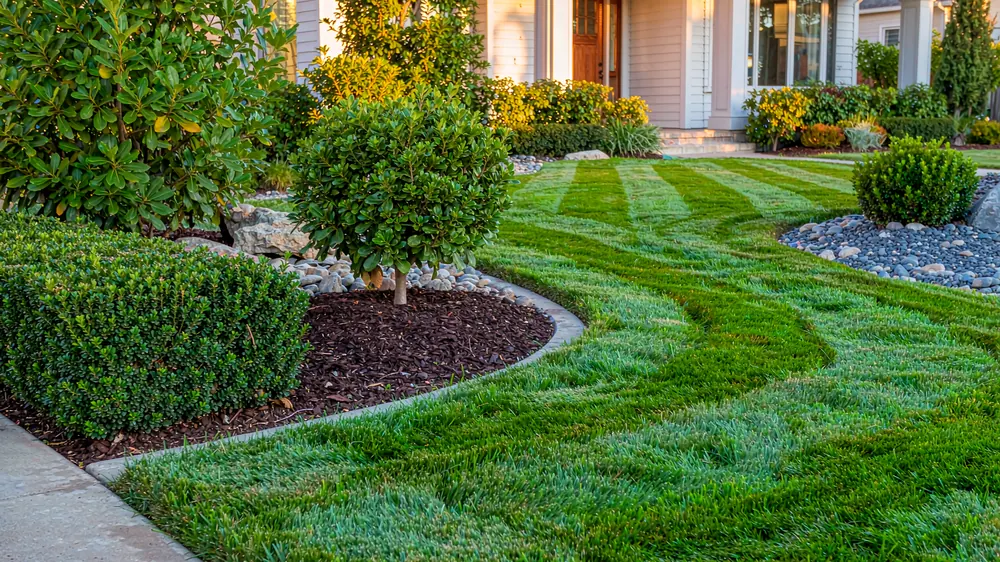
Maintained front yard with mowing stripes, a sharp spade-cut edge along the walkway, a trimmed boxwood hedge and a fresh mulch ring around a tree
What the add-ons buy you. Striped turf, a crisp spade-cut edge where grass meets concrete, a tight hedge line and fresh mulch in the beds — that is the visible result of the services priced in the table below, and the reason a "mow only" quote often looks thin next to a full program.

Add-on services — what the calculator returns at 5,000 sq ft

ServicePer applicationApplications / seasonSeason total
Weed control≈$1104≈$440
Dethatching≈$1151≈$115
Aeration≈$1551≈$155
Fertilization≈$905≈$450
Mulch cleanup & refreshfrom $1501≈$150
Seeding / overseeding≈$5001≈$500
Leaf removal≈$1502≈$300
Yard cleanupfrom $2002≈$400

These are the calculator's own outputs at national index 1.00 on a 5,000 sq ft lawn — not a separate price list, so the table and the calculator can never disagree. Scale by your state index, slope and obstacle multipliers. Every figure sits inside the published 2026 ranges (LawnStarter: weed $50–210, dethatching $65–165, aeration $107–202, fertilizer $67–405, seeding $427–1,514, leaf removal $107–435, yard cleanup $216–462).

Cost by State, Province & Season

The calculator covers all 50 US states + DC and 13 Canadian provinces/territories. Every state carries a rate index vs the national average and its typical mowing season length — both shown in the state dropdown and used in the annual estimate.

California140% of avg · 12-month season
Hawaii186% of avg · 12-month season
Massachusetts148% of avg · 7-month season
New York133% of avg · 6-month season
Florida101% of avg · 12-month season
Texas91% of avg · 10-month season
Minnesota93% of avg · 5-month season
Ontario (CA)108% of CA avg · 6-month season
British Columbia (CA)112% of CA avg · 9-month season
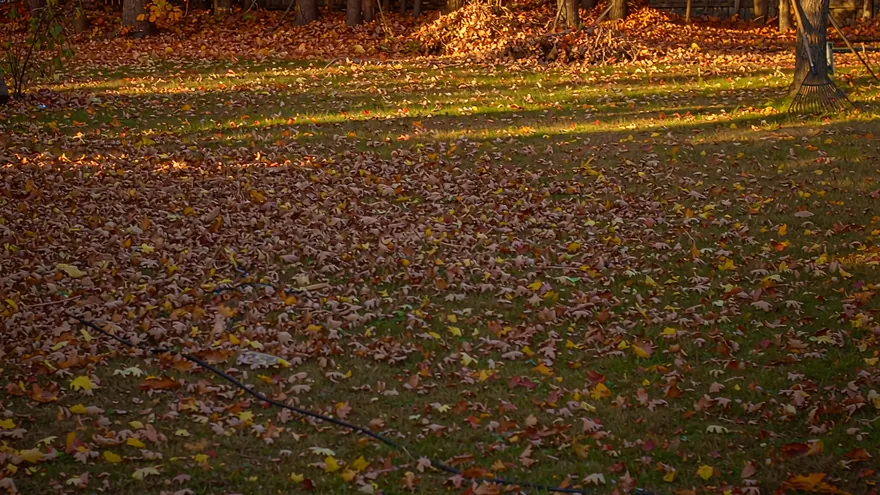
Suburban lawn in autumn covered with fallen leaves, the last cut of the year Autumn
Leaf drop ends it — one final cut, then the mower is put away.
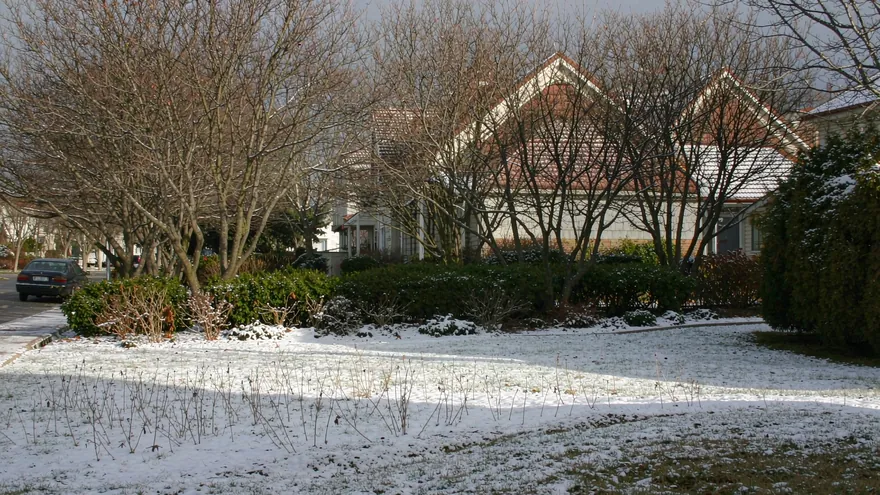
Suburban lawn in winter under a thin layer of snow with bare trees, dormant and not mown for months Winter
Dormant under snow — up to seven months with no cut at all in the north.

Season length is a multiplier, not a detail. The two photos above are the same kind of lawn in the same kind of neighbourhood, months apart. Two lawns at the same per-visit rate cost wildly different amounts per year: a 12-month Florida season means 48 weekly cuts, while a 5-month Minnesota season means 20. That gap — not the hourly rate — is what makes northern quotes look cheap on paper and short in reality.

Frequently Asked Questions

19 answers in two parts — what things cost, and how far you should trust this calculator. Every figure below comes from the same pricing model the calculator above runs on, so the FAQ and your estimate cannot disagree.

How much does it cost to mow a lawn?
A typical 5,000 sq ft residential lawn runs about $58 per visit at national average rates, and a full acre about $235. Per square foot that is roughly $0.012 on a standard lot, falling to about $0.005 on an acre, because drive time and equipment setup are fixed costs spread over more grass. Small lots are subject to a $35 minimum. Enter your size in the calculator for an exact figure.
How much does it cost to mow half an acre?
Half an acre (21,780 sq ft) averages about $150 per visit at national rates, ranging roughly $124–$278 depending on your state. That is about $300 per acre — already cheaper per acre than a quarter-acre lot, because the fixed costs are spread over more grass.
What is the cost of mowing grass per acre?
One acre (43,560 sq ft) averages about $235 per visit, or roughly $195–$437 depending on your state. The price per square foot drops as the lawn grows — from about $0.012 at 5,000 sq ft to $0.005 at one acre — because drive time and equipment setup do not change with size. Pick your state above to see the exact multiplier.
How much does it cost to mow 10 acres?
Ten acres typically runs about $1,049 per visit, or roughly $105 per acre — less than half the per-acre rate of a suburban lot. At that size the work is usually field or rough mowing with a wide-deck machine rather than a finish cut, and wooded, sloped or ditched ground prices much higher.
Does an overgrown lawn cost more to mow?
Yes. In our model tall grass adds about 45% and severely overgrown grass about 90%, because the mower needs multiple passes, runs slower and the clippings have to be dealt with. Switch the grass condition selector to “Tall” or “Overgrown” in the calculator and the estimate updates instantly. Most contractors quote a one-time cleanup rate for the first visit with a neglected lawn, then move to normal maintenance pricing.
How often should a lawn be mowed?
Weekly during peak growth, stretching to every 10–14 days in slower periods. Never remove more than one third of the blade height at once or the lawn thins and yellows. Cool-season grasses peak in spring and fall, warm-season grasses in summer. Choosing a weekly plan applies our 15% recurring discount (bi-weekly 10%, monthly 5%) — see the frequency options, or read the full mowing frequency guide by grass type and region.
How long does it take to mow an acre?
About 44 minutes with a 54-inch zero-turn, roughly 1 hour with a 42-inch riding mower, 2.5 hours with a self-propelled 21-inch mower and 3.5 hours with a basic gas push mower — all including 20 minutes of trimming, edging and blowing. Obstacles, slopes and tall grass add time on top. Switch mowers in the DIY vs Hire tool to watch the time change.
How many acres can you mow per hour?
On open flat ground, roughly 0.3 acres per hour with a 21-inch push mower, 0.7–0.9 with a 42-inch rider and about 1.4 with a 54-inch zero-turn, once trimming is included. Add 20–30% more time for obstacles, slopes and heavy trimming. These figures come from the same model that powers our DIY time estimate.
Is it cheaper to mow my own lawn or hire?
DIY avoids the labour cost but adds equipment ($120–$6,500 depending on the mower), fuel or electricity, maintenance and your own time. Hiring runs about $58 per visit for a typical lawn and $235 for a full acre, including edging, blowing and disposal. Use the DIY vs Hire tool to compare both for your exact lawn and hourly value — or read the full cost comparison.
How much does weed control cost?
Weed control runs about $110 per application on a 5,000 sq ft lawn, with a $60 minimum, and roughly $440 for a four-visit season program. Larger lots and higher-cost states push a full season toward $700. Add it to your estimate in the service picker.
How much does lawn aeration cost?
Core aeration costs about $155 for a 5,000 sq ft lawn and about $240 at 10,000 sq ft — roughly $0.02–$0.03 per square foot, with a $100 minimum. Most lawns need it once a year, usually in fall.
Do lawn costs change by state and season?
Yes, substantially. Our state multipliers run from 0.83× the national average in Oklahoma to 1.86× in Hawaii — California sits at 1.40× and Massachusetts at 1.48× — so the same acre can cost more than twice as much. Season length compounds it: northern states get 3–6 mowing months while the South and West get 11–12, so annual cost differs far more than the per-visit price. Change your state above to see both effects.
Can I generate a lawn care quote for free?
Yes. Our free quote generator produces a printable estimate with no sign-up that you can save as a PDF — for homeowners comparing bids, or pros sending a customer a price.

About this calculator

What does this lawn mowing calculator actually do?
It takes five inputs — lawn size, grass condition, slope, obstacles and your state or province — and returns what a local crew would charge for a one-off mow, a weekly plan, a full season total, and your own DIY time and cost. It also prints the per-square-foot rate the number came from, so you can sanity-check it. It is free, needs no sign-up and no card, and nothing you type is stored or sent anywhere.
How accurate is the estimate?
Accurate enough to budget with, not to sign a contract on. This calculator is calibrated to published 2026 market data (LawnStarter for the US, Mow.ca and Dreame for Canada) and reproduces those bands closely — but it models a typical crew, not a specific one. Expect ±20% locally, treat the output as a range, and read the limitations section for exactly where it is weakest.
Does this replace getting real quotes or a site visit?
No — and be sceptical of any calculator that claims otherwise. Use it before you call anyone: within a minute you will know whether the number you are quoted is in the right ballpark, which puts you in a much stronger position to negotiate. Then get two or three local quotes, and expect a good contractor to walk the property before signing. Obstacles, access and grass type genuinely cannot be priced off a satellite image.
How is the price actually worked out?
A per-square-foot base rate, multiplied by a size-efficiency curve (the rate falls as the lawn grows, because drive time and setup are fixed), then by your grass condition, slope and obstacles — or, if you enter your lawn's actual edge length, a measured edge factor instead of a rough bucket — then the frequency discount and state cost index. Every multiplier is published on the methodology page, and you can watch each one move the price in the live breakdown.
Why do different websites quote such different prices per square foot?
Because a per-square-foot rate is meaningless without the lawn size attached to it. In our own model the rate is about $0.012/sq ft on a 5,000 sq ft lot and $0.005/sq ft on a full acre — the same job is 2.4× cheaper per square foot once the lot is big enough to spread the fixed costs. A site quoting a flat $0.003–$0.006 is describing large lots and leaving the fixed cost out of the maths; one quoting $0.01–$0.02 is describing a typical suburban lot. Both can be internally correct and useless for your property. That is why we quote per visit by size band.
Who is this calculator for?
Homeowners first — anyone who wants to know what a fair price looks like before calling a crew. It also works for lawn care operators sanity-checking a bid: the multipliers are the same ones you would use on a quote sheet, and the pros page carries the by-size benchmark table and a step-by-step pricing workflow.

DIY Tools & Gear (Affiliate Picks)

If you'd rather mow it yourself, these are editor-tested picks matched to common lawn sizes. As an Amazon Associate we earn from qualifying purchases.

Cordless Mower
View on Amazon →
String Trimmer
View on Amazon →

Generate a Lawn Care Quote (Free, No Sign-up)

Homeowners: compare bids or keep a summary. Pros: produce a clean, printable estimate to send customers. No account — everything runs in your browser. Print or "Save as PDF" from the print dialog.

Add-on services — optional, priced per season

Prices come from the same rate card and season settings as the calculator above, so a quote line and the calculator total can never disagree.

Tip: fill the calculator at the top first, then click "Use my calculator inputs".

Compare Local Lawn Pros

Prefer to have someone else do it? Enter your ZIP and compare real quotes from leading provider marketplaces. Free to check — no account, no sign-up.

We may earn a commission if you hire through a partner — at no extra cost to you. Each link opens the provider's own site; we never receive your contact details.

Read Next

Three guides that answer what the calculator cannot: how often the lawn actually needs cutting, whether doing it yourself is worth it, and how a fair quote is built from the other side of the fence.